
Top 5 Things to Know Before Re-Decking Your Wood Deck
February 18th, 2026
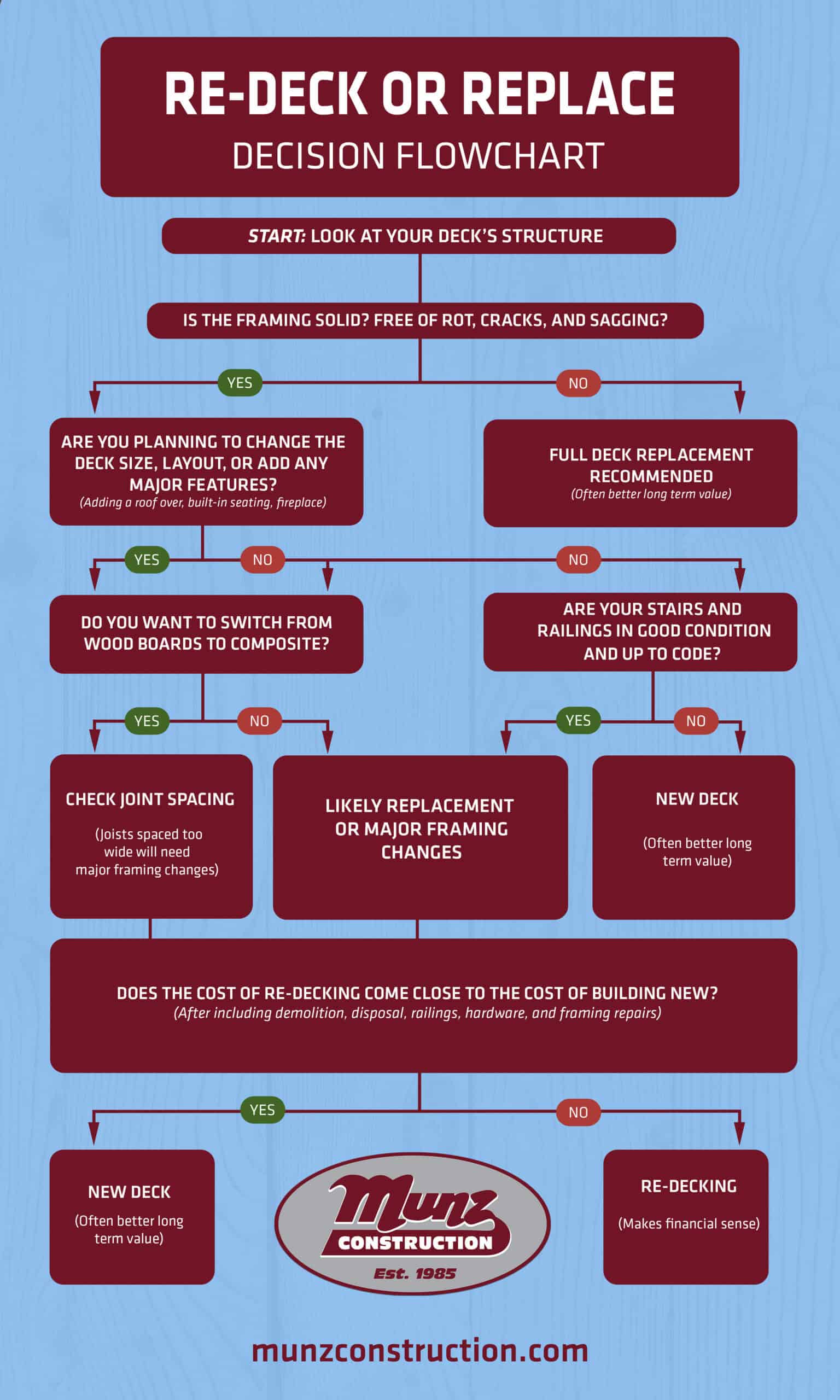
As spring approaches, more people will be looking closely at their decks. A weathered deck surface does not always mean you need to start over from scratch. Many homeowners wonder whether they can simply replace the boards and keep the existing structure. This process is called re-decking, and in the right situation, it can be a smart investment. In other cases, a full replacement delivers better safety and long-term value.
Before deciding, it is important to understand the bigger picture. Here are five key things every homeowner should know before re-decking a wood deck.
1. The Structure Underneath Is Everything
The boards are only the visible layer of your deck. The real strength comes from the framing below, including joists, beams, posts, and footings. If any of these components are rotted, cracked, or sagging, replacing only the boards will not fix the underlying problem.
A deck can look perfectly fine from above while the structure beneath it quietly deteriorates. Re-decking on a weak frame can lead to bounce, uneven surfaces, and costly repairs much sooner than expected. A professional inspection is often the most important first step before deciding whether re-decking is even an option.
2. Re-decking and Full Replacement Are Very Different Projects
Re-decking focuses on removing the old surface boards while keeping the existing frame intact. In some cases, homeowners also update railings or stairs at the same time. This approach can be faster and less disruptive because the main structure remains in place.
A full deck replacement, on the other hand, removes everything. Boards, railings, framing, and sometimes even footings are demolished and rebuilt from the ground up. While this option requires more time and a higher upfront investment, it offers the benefit of modern building standards, complete design freedom, and a longer overall lifespan. Understanding the difference between these two paths helps homeowners set realistic expectations from the start.
3. Composite Versus Wood Changes the Decision
Many homeowners consider upgrading to composite decking during a re-decking project. Composite boards are attractive because they require less maintenance and last longer, but they also demand stronger structural support.
Older decks were often framed with wider joist spacing, which worked well for wood but may not adequately support composite materials. Without tighter spacing, composite boards can feel soft underfoot or develop a wavy appearance over time. Adjusting the framing to accommodate composite can increase labor and material costs enough that rebuilding the deck becomes the smarter long-term move. Wood-to-wood re-decking is usually more straightforward, but it does require ongoing maintenance.
4. Re-decking is not always as Inexpensive as It Sounds
At first glance, re-decking appears to be the budget-friendly option. However, once demolition, disposal of old materials, hardware replacement, railing updates, and potential framing repairs are included, the price gap between re-decking and full replacement can shrink quickly.
In many situations, the cost of re-decking approaches a large percentage of the cost of building new, especially when premium materials are involved. Homeowners often find that spending a bit more upfront for a full replacement provides better durability and fewer surprises down the road. Looking beyond the initial price and considering long-term value is critical.
5. Stairs, Railings, and Maintenance Should Never Be an Afterthought
Stairs and railings are commonly overlooked when planning a re-decking project. Stair stringers can weaken or break during board removal, and existing railings may not meet current code requirements or match the deck’s updated look. These elements can significantly increase project scope and cost if they are not considered early.
Maintenance is another major factor. Wood decks require routine staining and sealing to maintain their appearance and longevity. Composite materials reduce maintenance but cost more upfront. Thinking ten to fifteen years ahead, rather than just this season, helps homeowners choose the option that aligns with their lifestyle, budget, and future plans.
Final Thoughts
Redecking can be a great solution when the framing is strong, the design still works for your lifestyle, and the materials are carefully chosen. However, when the structure shows signs of age or you are seeking significant upgrades, a full replacement often offers greater safety, flexibility, and long-term value.
Every deck and every home is different. A professional evaluation can provide clarity and help you determine whether re-decking or rebuilding is the right path for your space and your investment. With over 40 years of experience and thousands of satisfied customers, Munz Construction is your go-to place for a new deck in Bucks County, Montgomery County, Mercer County, and surrounding areas.
Right now is the perfect time to start planning something meaningful.
Visit MunzConstruction.com or call 215-953-8833 to begin the conversation.
Don’t move, improve with Munz Construction!