At some point, many homeowners begin asking themselves the same question. Do we actually need a bigger house, or do we need our current home to function better?
For many families in Bucks County and Mercer County, that feeling tends to build gradually over time. It is usually not caused by one dramatic issue. Instead, it is a collection of small frustrations that slowly become more noticeable. The kitchen starts feeling crowded when everyone is home at once. Certain rooms are barely used, while the rest of the house feels tight. Storage becomes harder to manage. Hosting feels more stressful than it used to.
The immediate assumption is often that the house itself is too small. But in many cases, the real issue is not square footage. It is how the space is being used.
The good news is that making your home feel bigger does not always require moving or building a large addition. Sometimes the most impactful changes come from improving layout, flow, lighting, storage, and the way rooms connect.
In fact, many homeowners are surprised by how different their home can feel once those issues are properly addressed
Start by Looking at How You Actually Live in the Space
One of the biggest mistakes homeowners make is focusing only on room size instead of how the home functions day to day.
A house can technically have enough square footage and still feel cramped if the layout is working against you. This becomes especially noticeable during busy mornings, gatherings, or weekends when multiple people are using the home at the same time.
Take a step back and pay attention to how your family naturally moves through the house.
Where does everyone tend to gather? Which spaces feel crowded the fastest? Are there rooms that rarely get used? Are there bottlenecks where people constantly cross paths?
In many homes throughout Bucks and Mercer Counties, especially older homes, layouts were designed for a very different style of living than what families want today. Rooms were often more closed off, kitchens were smaller, and entertaining was less central to the home’s design.
That is why many homeowners eventually realize the problem is not necessarily the size of the house. It is that the home no longer supports the way they actually live.
Open Sightlines Can Completely Change How a Home Feels
One of the most effective ways to make a home feel larger is to improve visual openness between spaces.
When rooms feel disconnected from one another, the entire house can start to feel tighter and more segmented. On the other hand, when spaces connect naturally, even a modest-sized home can feel dramatically more open.
This does not necessarily mean that every home needs a fully open-concept layout. In fact, many homeowners still want separation between certain spaces. The goal is not to remove every wall. The goal is to create better flow and better connection throughout the home.
Sometimes that means widening an opening between the kitchen and living room. Sometimes it means improving sightlines so natural light travels further through the house. Other times, it involves creating a stronger connection between indoor and outdoor spaces, especially during the summer months, when movement between the two increases significantly.
According to the National Association of Home Builders, open and connected living spaces continue to rank among the most desired features for homeowners. And it makes sense. Homes that flow well feel easier to live in.
Natural Light Makes Rooms Feel Larger
Lighting shapes how people experience a space more than most realize.
Dark rooms naturally feel smaller and more enclosed, while brighter spaces tend to feel more open, calm, and comfortable. This becomes especially noticeable in late spring and summer when longer days and stronger sunlight highlight areas of the home that may feel dim or closed off.
Many homeowners immediately think of square footage when a room feels small, but often the issue is the quality of light in the space.
Simple improvements can make a major difference, including larger windows, better placement of lighting fixtures, lighter finishes, or improved natural light flow between rooms.
Even changing how a room connects visually to surrounding spaces can completely shift how large it feels.
Finished Basements Can Rebalance the Entire Home
One of the most overlooked opportunities in many homes is the basement.
Throughout Bucks and Mercer Counties, countless basements are used mostly for storage, while the main living areas upstairs become increasingly crowded. Meanwhile, there is an entire level of the home with untapped potential.
A finished basement can dramatically improve how the entire home functions by creating additional usable living space without increasing the house’s footprint. For some homeowners, that becomes a second family room. For others, it becomes a place for kids and teenagers to spend time, a guest space, a home office, or an entertainment area during gatherings.
During the summer, basements often become even more valuable because they naturally stay cooler than upper levels. According to the U.S. Department of Energy, lower levels can remain several degrees cooler during warmer months, making them one of the most comfortable spaces in the home.
In many cases, making a home feel bigger is less about adding square footage and more about finally using the space you already have.
Storage Has a Bigger Impact Than Most People Think
Clutter changes how a home feels.
When storage is limited or poorly designed, everyday items start taking over countertops, corners, walkways, and surfaces. Even a fairly large room can begin to feel tight when there is nowhere for things to go.
This is why smart storage solutions often make such a significant difference.
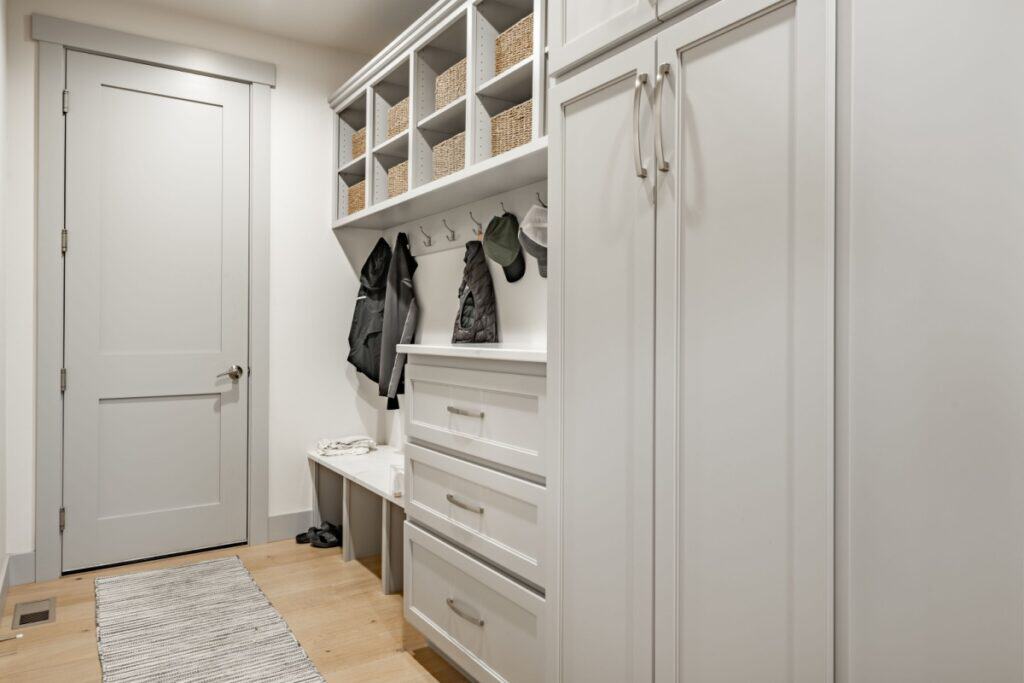
Better kitchen cabinetry, built-in storage, improved mudrooms, bathroom organization, and more intentional layouts can all create a sense of openness without physically expanding the home.
The goal is not simply to store more things. It reduces visual stress and creates breathing room throughout the house.
When storage works properly, the entire home tends to feel calmer and easier to navigate.
Flow Matters More Than Square Footage
One thing homeowners often notice during gatherings or busy weekends is how much movement patterns affect comfort.
If people are constantly squeezing through narrow areas, walking around furniture, or crowding into the same part of the home, the space immediately starts feeling smaller.
A home that flows well feels easier to live in because movement feels natural. People spread out more comfortably. Rooms function more efficiently. The house supports activity rather than fighting it.
In many remodeling projects, improving flow ultimately has a bigger impact than adding actual square footage.
That realization surprises many homeowners.
Sometimes the Best Solution Is Not Moving
There are certainly situations where a larger home or an addition makes sense. Families grow, needs change, and sometimes additional space truly is necessary. But many homeowners discover they do not need an entirely different home. They need their current one to work better.
Better layout. Better lighting. Better storage. Better use of existing spaces. Better connection between rooms.
Those improvements can completely transform how a home feels day to day.
Why Homeowners Start Noticing This in the Summer
This time of year tends to make these issues much easier to notice. Summer brings more activity into the home. More gatherings. More movement between indoor and outdoor spaces. More people are using the kitchen, bathrooms, and living areas simultaneously. And once homeowners start noticing where the home feels tight or inefficient, they usually continue noticing it throughout the season. That is why late spring and early summer are often when homeowners begin to seriously consider improvements.
If you have already been considering home updates, this can be an ideal time to start planning.
For many homeowners, this is the point at which they move from simply thinking about changes to actually exploring what is possible.
Make Your Home Feel Better Without Leaving It
Making your home feel bigger is not always about adding more square footage.
Often, it is about improving how the home functions, how spaces connect, and how comfortable the house feels during everyday life.
When a home is designed around the way people actually live, everything feels easier. Rooms feel more open. Movement feels more natural. The home becomes more enjoyable to spend time in.
If you are in Bucks County or Mercer County and starting to think about how your home could function better, now is a great time to begin exploring your options.